
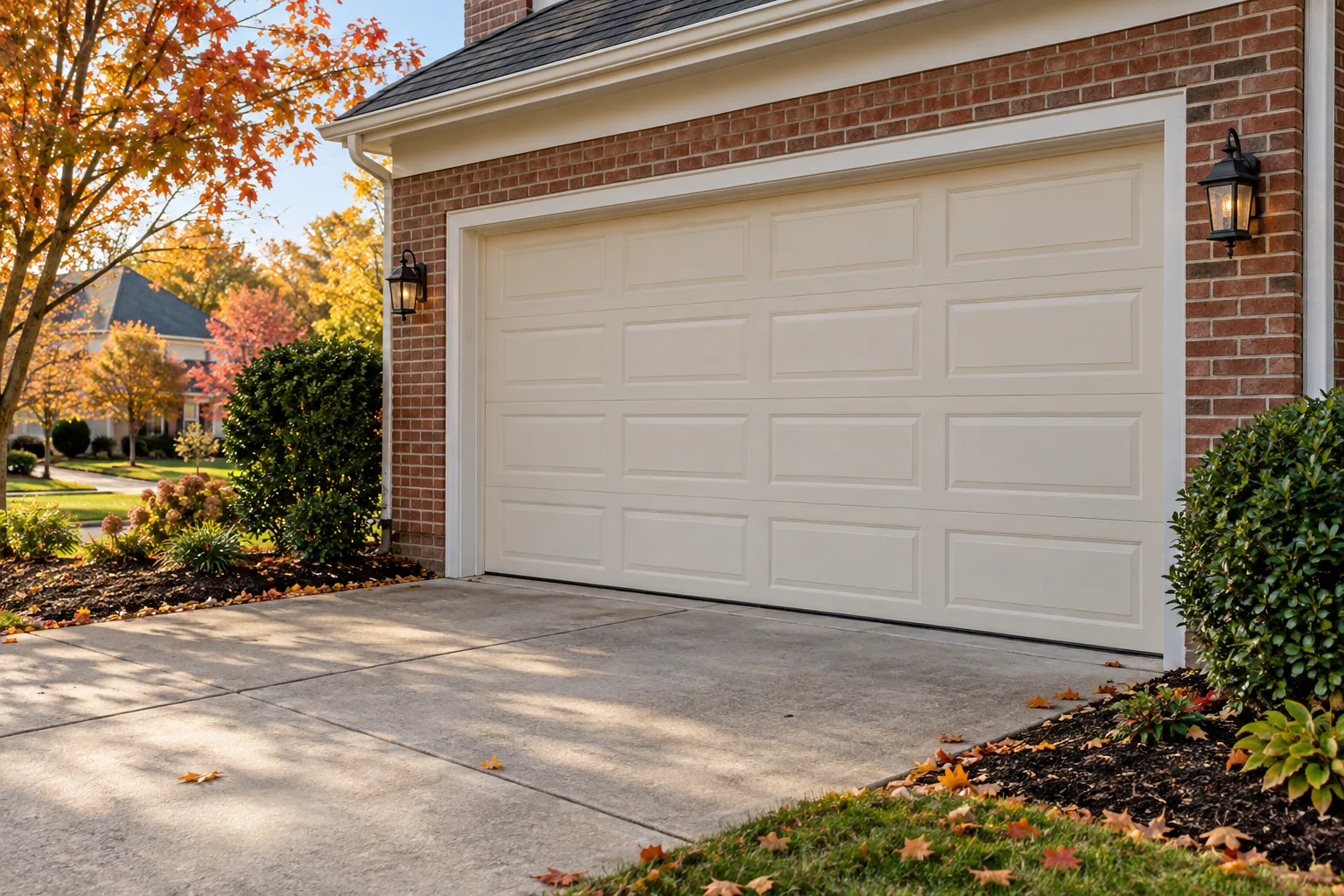
Routine maintenance starts with the instructions for your specific door and opener. A homeowner can notice changes and keep the opening clear, while tensioned hardware and mechanical adjustments belong to a trained technician. For DMV homes, use seasonal reminders to inspect safely rather than waiting for a failure.
Keep the opening and sensors unobstructed
Look for storage, leaves, and other objects near the doorway or photo-eye beam. Remove obstructions only when the door is stationary and no one can operate the controls. Keep fingers away from joints, rollers, tracks, and other pinch points.
Follow the opener manual for cleaning accessible sensors. Do not alter their wiring or bypass them. If the system will not close normally, arrange inspection instead of changing force settings to overcome the problem.
Notice changes in movement and sound
Watch normal operation from a safe distance. New grinding, hesitation, jerking, or uneven travel deserves attention. Stop using the system when a cable is loose, a track is damaged, or a spring may be broken. Do not repeatedly test a fault to see whether it clears.
A door that worked yesterday can still develop a problem today. Keep a brief note of symptoms and dates to help the technician understand what changed.
Follow model-specific maintenance instructions
Lubrication requirements depend on the components and manufacturer. Do not spray every part or assume the tracks need lubrication. Use the specified product and locations only when the task is safe and permitted by the manual. If access requires working near tensioned hardware, arrange professional service.
Safety-reversal checks should follow your exact opener instructions. If a check fails, stop using the automatic system and request repair. Never change travel or force settings solely to make a failed check pass.
Inspect weather seals visually
From a safe position, look for torn or deteriorated seals and daylight around the closed opening. A gap may involve the seal, door alignment, or the surrounding opening. Do not adjust a door under tension to eliminate the gap yourself.
Weather seals can help limit drafts and debris, but they are not a cure for drainage problems or structural gaps. Discuss the underlying cause before replacing parts.
Plan professional maintenance
Follow the manufacturer’s recommended schedule and adjust planning to usage and observed condition. Ask the technician to inspect springs, cables, rollers, tracks, attachments, door balance, and opener safety features. Request an explanation of required repairs versus optional replacements.
Book DMV garage door maintenance
For garage door maintenance in Alexandria, Arlington, Fairfax County, Washington, DC, and Potomac, call 703-867-4557 or contact Nova Garage Door Repairs. If a fault is already visible, request repair rather than treating the visit as routine lubrication.